Stump Grinding in Conroe, TX
Stump grinding in Conroe, TX: why leftover stumps cause problems in clay soil, how grinding works, and what to expect with the grindings and regrowth.
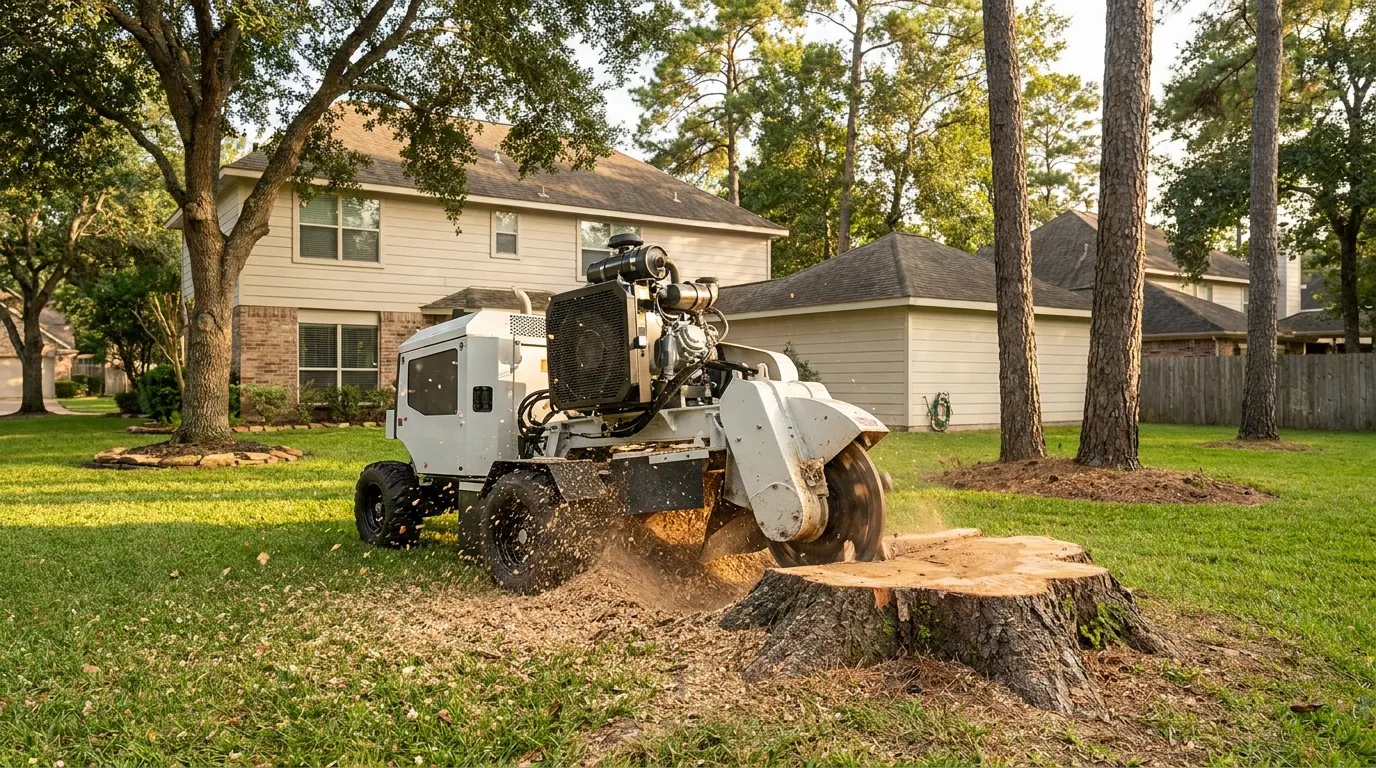
Why the stump shouldn't stay
Once a tree is down, the stump left behind is more than an eyesore. In Conroe's warm, wet climate a fresh stump becomes a magnet for termites and carpenter ants that are then a short trip from the house, and many species — tallow, hackberry, water oak — will sprout a ring of suckers from the roots and try to grow back. A stump also blocks mowing, replanting and any paving or fence line you want to run through that spot.
Grinding is the clean end to a removal. If you've just had a tree taken out, pairing the grind with the tree removal visit saves a second mobilization; if an old stump has been sitting for years, it's usually an easy standalone job.
What grinding solves
-
Stops regrowth
Grinding out the stump and major surface roots removes the energy stores the tree would use to sprout again, which matters with the aggressive regrowers common here.
-
Removes the pest harbor
A rotting stump feeds termites and ants in our humid soil. Taking it out closes off that food source near your foundation.
-
Opens the ground back up
Below-grade grinding lets you plant grass, set a bed, run a fence, or pour a slab where the tree used to be.
-
Clears mowing hazards
Low stumps hidden in St. Augustine turf wreck mower blades. Grinding them out flush removes the trip-and-strike risk.
How stump grinding works
A grinder's rotating wheel chips the stump down into mulch, pass by pass.
-
Check for utilities
Before any grinding we locate buried lines and sprinkler heads around the stump, since roots and utilities often share the same trench in a developed Conroe yard.
-
Grind below grade
The wheel reduces the stump and flare several inches below ground level — deep enough to replant grass, deeper if you're planting a new tree in the same spot.
-
Chase surface roots
Large surface roots on strong regrowers are ground back where they'd otherwise sprout, within reason for access and nearby structures.
-
Backfill or haul
The grindings make good backfill for the hole, or we can remove them and bring in topsoil if you plan to lay sod right away.
Soil, regrowth and what to expect
Conroe's clay holds moisture, and a buried mass of stump grindings will settle as it breaks down, so it's normal to top off the spot with soil a few weeks later. If you intend to plant a new tree where the old one stood, let us know — we grind deeper and wider so the new roots aren't fighting old wood, since ground-down wood ties up nitrogen as it decomposes.
Grinding handles the stump; it doesn't chase every lateral root across the yard, and a few may send up the occasional sucker that mowing will finish off. If you still have standing trees you're unsure about, a quick tree health assessment can tell you which ones are headed for the same fate before they fail.
Frequently asked questions
How deep do you grind a stump?
For lawn, several inches below grade is enough to cover with soil and sod. If you're replanting a tree or shrub in the same spot, we grind deeper and wider so the new roots have clean soil to work into.
What happens to the wood chips?
The grindings can stay as backfill for the hole, which is the simplest option, or we can haul them off and bring in topsoil so you can lay sod cleanly. It's your call based on the spot.
Will the tree grow back after grinding?
Grinding the stump and major surface roots removes most of the energy the tree needs to resprout. A stray root sucker can appear with aggressive species, but regular mowing knocks those down quickly.
Can you grind a stump without removing a whole tree?
Yes. Old stumps left from past removals are a common standalone job — we just need access for the grinder, which is usually straightforward in an open yard.
Talk to someone about your job
Call to describe the problem and get a quote for work in Conroe, TX.