Tree Removal in Conroe, TX — Process, Cost and Scheduling
How tree removal works in Conroe, TX: warning signs a tree should come down, the removal process step by step, and what drives the price.
When removal is the right call
Not every struggling tree needs to come down, but when one does, waiting rarely makes it cheaper or safer. In Conroe the trees that most often need removal are post oaks and water oaks that have outgrown their root space, pines killed by beetle activity after a dry summer, and sweetgums or hackberries leaning hard over a roof after a storm. A tree removal near me search usually starts the day someone notices a crack in the trunk, a heave in the soil, or a limb that finally gave way in the yard.
If you're weighing whether the tree can be saved, a tree health assessment is the honest first step — removal is the recommendation only when the structure or decay has passed the point where pruning or cabling helps.
Warning signs a tree should come down
-
Lean with soil movement
A new lean paired with cracked or mounded soil on the opposite side of the trunk means the root plate is lifting. In Conroe's expansive clay, a saturated spell after drought can loosen anchorage quickly.
-
Dead crown or no spring leaf-out
A canopy that stays bare while neighboring trees leaf out, or more than a third dead wood up top, points to decline that trimming won't reverse.
-
Fungal conks and hollow sound
Mushroom shelves at the base and a hollow tone when the trunk is tapped signal internal decay that weakens the wood holding the tree up.
-
Trunk cracks and included bark
Vertical seams, or a tight V-shaped union where bark is pinched inside the fork, are failure points that often split in high wind.
How a removal is done
Every removal is planned around what the tree can hit on the way down.
-
Assess and plan the drop
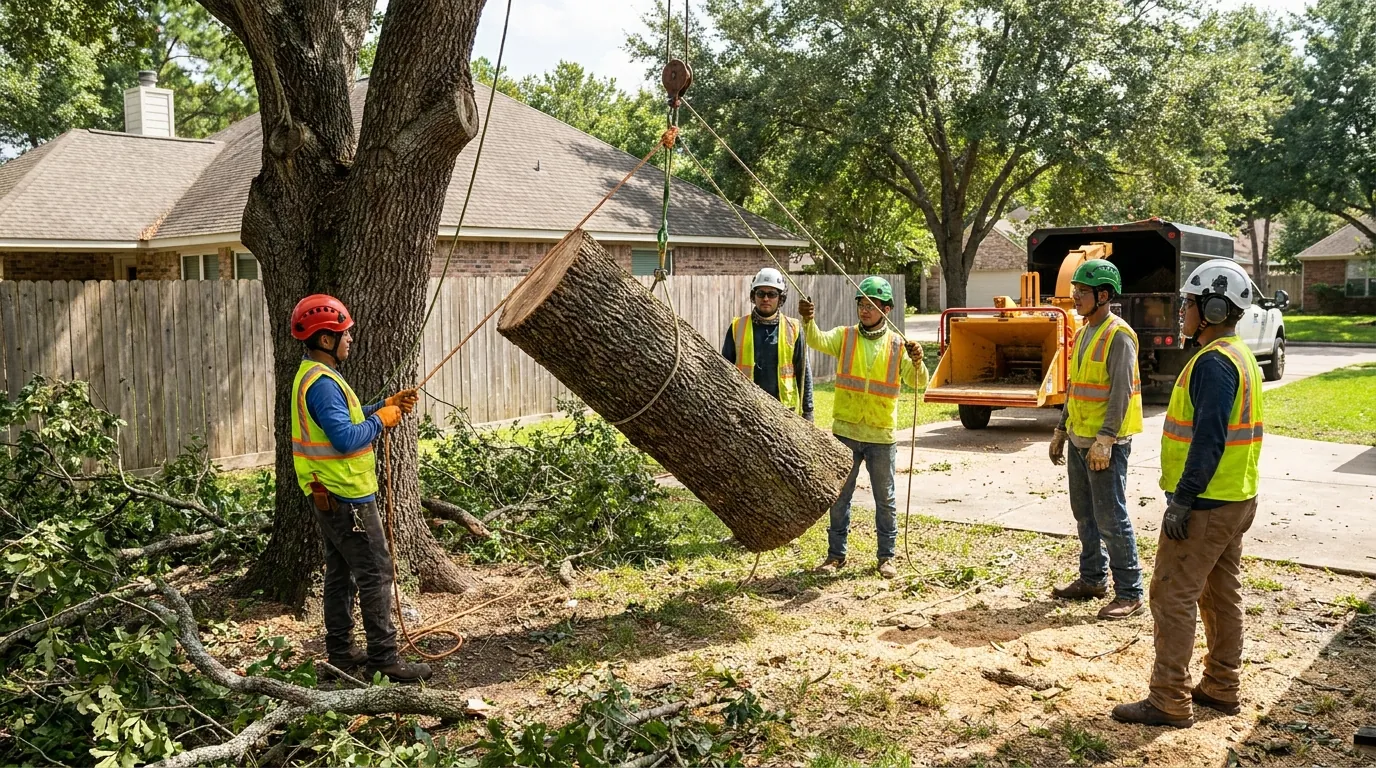
We check lean, decay, wind, and what sits below — fence, roof, lines, or neighboring trees — then decide between a straight fell and a sectional takedown.
-
Rig or fell in sections
Tight Conroe lots usually mean climbing or a bucket, cutting the tree down in controlled pieces and lowering limbs on ropes rather than letting them fall.
-
Process the wood
Brush is chipped and larger wood is cut to length. We can haul it off or leave rounds for firewood if you want them.
-
Deal with the stump
The stump is cut low and ground out separately — see our [stump grinding](/services/stump-grinding/) page for how the grind depth and root flare are handled.
Local soil and storm factors
Conroe's clay soils swell when wet and shrink hard in a dry August, and that constant movement stresses shallow-rooted species and loosens big trees over years. Add the sudden thunderstorms that roll through Montgomery County and you get the classic failure: a heavy, one-sided oak over a saturated root zone in a 50-mph gust.
Species matters too. Water oaks are fast and brittle and tend to drop limbs; pines die in standing groups once beetles move in; and tallow and hackberry grow fast but rot early. Knowing which tree you have changes how urgent removal is — and whether nearby trees need a look. If a tree has already come apart, our emergency tree service handles the storm-damage side.
Frequently asked questions
What drives the price of tree removal?
Size and species set the baseline, but access matters just as much. A tall water oak boxed in by a fence, pool and power line takes far more rigging time than the same tree in an open field, so a crew needs to see it to quote accurately.
Do you remove the stump too?
Stump grinding is a separate step because it uses different equipment. We can grind the stump the same visit or schedule it after, depending on access and whether you want the grindings hauled off.
Can a leaning tree wait?
A long-standing lean the tree grew into is usually stable. A new lean with cracked or lifted soil at the base is not — that's root failure in progress and should be looked at quickly, especially before a wet stretch.
Will removal damage my lawn?
We lower heavy wood rather than dropping it, and use plywood or mats under equipment where the clay is soft. Some rutting is possible in wet conditions, which is why we often wait out a soggy week when the tree isn't an immediate hazard.
Talk to someone about your job
Call to describe the problem and get a quote for work in Conroe, TX.