Tree Removal Installation & Replacement in Conroe, TX
Replacing a removed tree in Conroe? We plant the right species in the right spot for clay soil and hot summers, sited clear of your home and lines.
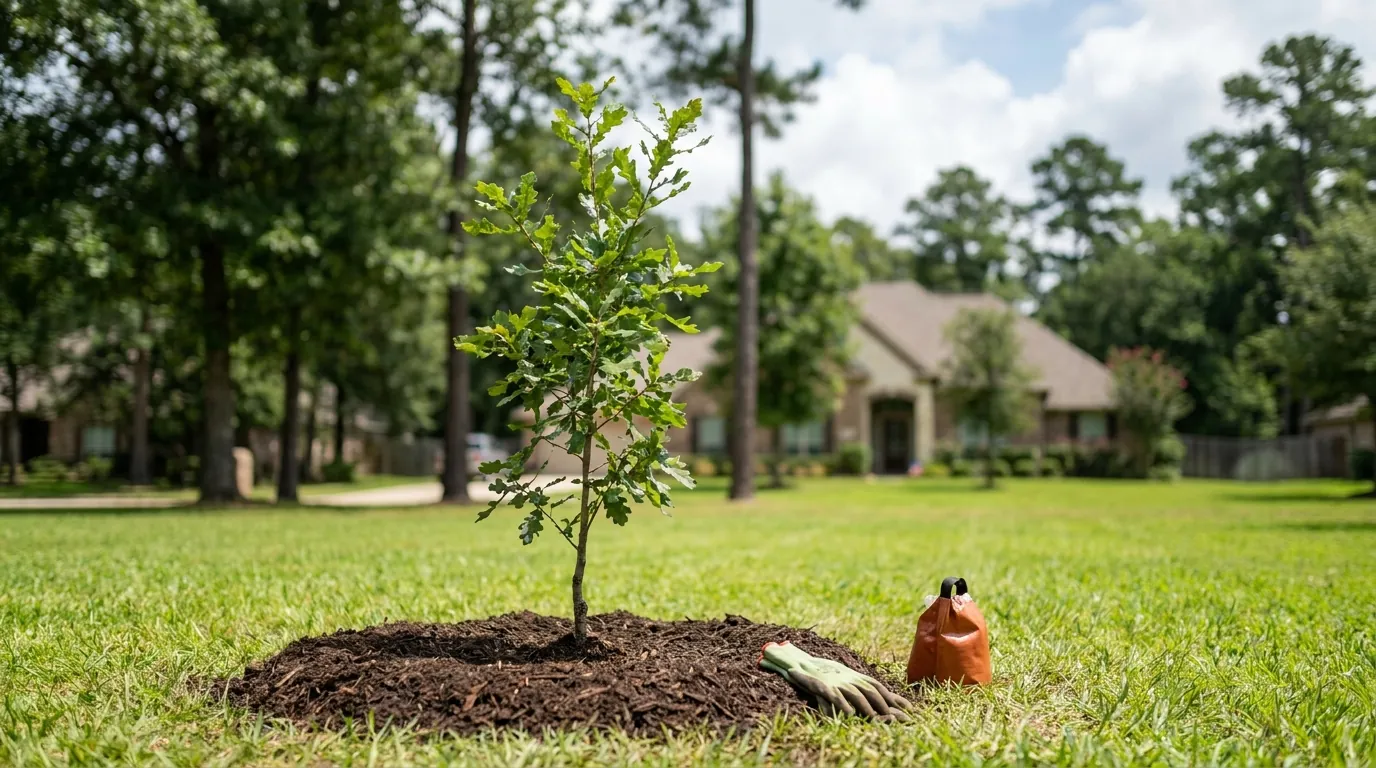
After the old tree is gone
Taking a tree down often leaves a gap — shade lost, a bare spot in the yard, or a place where the old tree failed and you want something better in its place. Tree removal installation is the replacement side of the job: choosing a tree that fits the site and planting it so it actually establishes in Conroe's demanding soil.
The mistake that leads to repeat removals is planting the wrong tree in the wrong spot — too close to the foundation, too big for the space, or a species that can't handle heavy clay and long heat. Getting the species and placement right from the start is what turns a replacement into a tree you keep for decades.
What goes into a good replacement
The species is only part of it. Where and how a tree is planted decides whether it thrives.
-
Right species for clay
Conroe's expansive clay drains slowly and moves with moisture. Trees that tolerate heavy, wet-then-dry soil and long heat hold up far better than species chosen only for looks.
-
Distance from the house
A replacement should be sited so its mature root spread and canopy won't crowd the foundation, roof, or driveway. Placing a tree by its full-grown size, not its nursery size, avoids future removals.
-
Clearance from lines and structures
Overhead utility lines, fences, and septic areas all constrain where a tree can safely grow. Good siting keeps the mature tree out of conflict from the start.
-
Sun, drainage, and low spots
Yards vary. A soggy low corner and a baked south-facing strip call for different trees, and the right match reduces stress from day one.
How installation is done
Planting on clay isn't the same as planting in loose loam. The process is built around the soil we actually have.
-
Site and soil review
We look at where the old tree stood, how the ground drains, sun exposure, and the location of structures and lines, then recommend species and placement that fit.
-
Preparing the planting area
On heavy clay the planting hole is dug wide rather than deep, with the root flare set at or slightly above grade so the tree doesn't sit in a bowl of standing water.
-
Setting the tree
The tree is positioned for clearance and appearance, backfilled with native soil so roots learn to grow into the surrounding clay rather than staying in an amended pocket.
-
Mulch and water setup
A proper mulch ring conserves moisture and moderates the soil temperature swings that stress young roots through a Conroe summer, and we set expectations for watering.
-
Establishment guidance
New trees need consistent water through the first hot season. We explain what the tree needs so it makes it through establishment instead of drying out in July.
Why Conroe conditions drive the plan
Planting here is a clay-and-heat problem. Expansive clay swells when wet and cracks when dry, and that movement is tough on young roots that haven't spread yet. Plant too deep or in a hole that holds water and the roots suffocate; plant something that hates heat and it scorches in its first summer. The species and the planting method have to answer both problems at once, which is why generic planting advice often fails in this soil.
Water management is the other half. New trees need steady moisture through establishment, but our summers alternate between drought and sudden downpours, so the setup has to handle both without drowning or drying the roots. A wide, shallow planting hole, native backfill, and a good mulch ring go a long way toward evening that out. Getting placement right also protects your investment — a tree sited clear of the foundation and lines won't become a future job for our tree removal service.
If your yard has a tree that's damaged but not gone, it's worth reading our tree removal repair page before deciding to remove and replace at all. When replacement is the right call, reach out through the contact page and we'll talk through species and placement for your specific lot.
Replacing a tree you had to remove?
Tell us about the spot and what you'd like from the tree — shade, privacy, or looks — and we'll suggest species and placement that suit your yard and our soil.
Planting and replacement across Conroe and Montgomery County.
Frequently asked questions
What kind of tree should I plant to replace a removed one?
It depends on the spot — sun, drainage, and how close it is to the house and lines — and on what you want from the tree. The key locally is choosing a species that tolerates heavy clay soil and long, hot summers, then siting it for its full mature size.
Why do you dig a wide hole instead of a deep one on clay?
Heavy clay drains slowly, so a deep hole becomes a bowl that holds water around the roots and suffocates them. A wide, shallow hole with the root flare at or slightly above grade lets roots spread outward into the surrounding soil and drain properly.
How much watering does a new tree need here?
Through the first hot season a new tree needs consistent, deep watering to establish — Conroe summers can dry out young roots fast. We explain a watering schedule so the tree survives establishment rather than stressing out in the heat.
Can I plant right where the old tree stood?
Often, but the old stump and root mass usually need grinding first to make room for a proper planting hole. We'll also check that the spot is the right place for the new tree's mature size, not just convenient.