Tree Removal Repair in Conroe, TX
Storm-damaged tree? Conroe tree removal repair saves trees worth keeping with hazard-limb removal, structural pruning, and support where it helps.
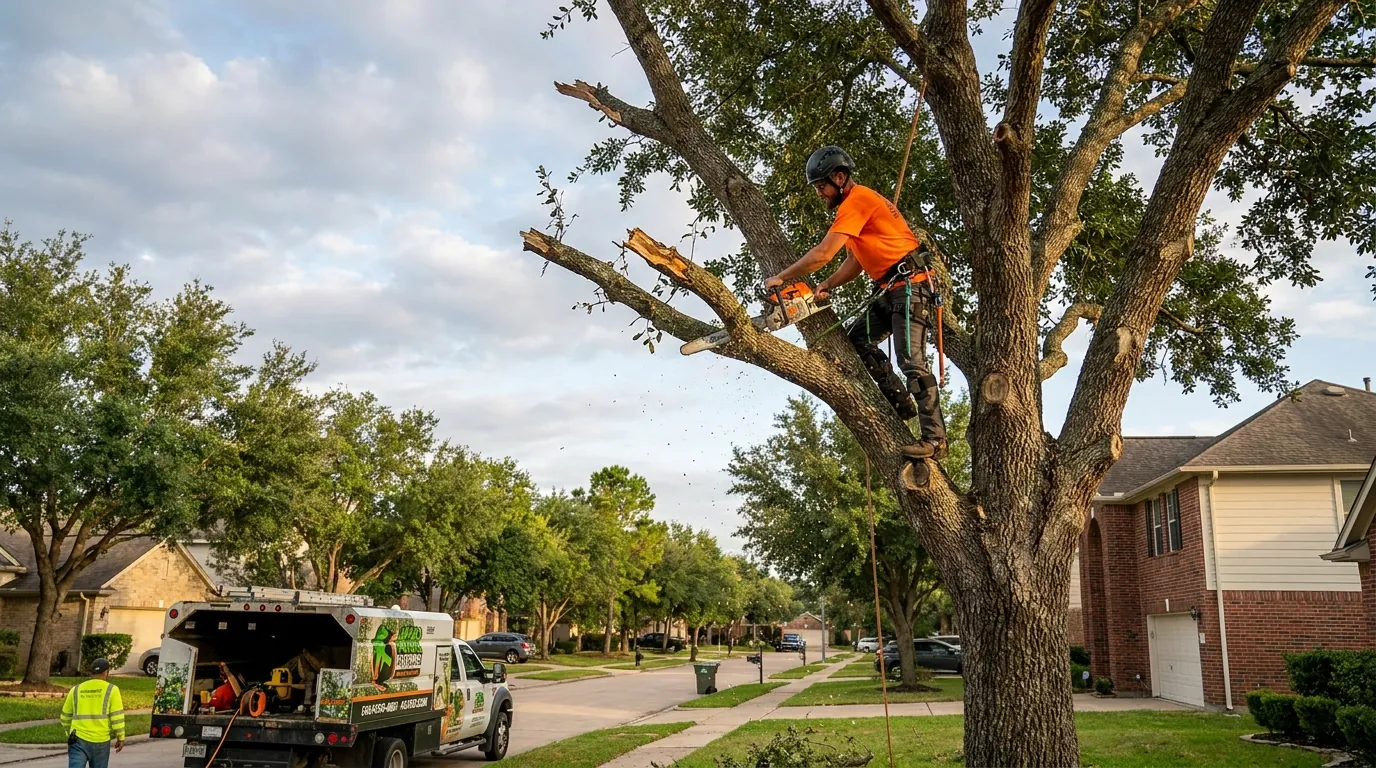
Not every damaged tree has to come down
After a Conroe storm, plenty of trees look worse than they are. A single snapped limb or a lopsided canopy doesn't mean the whole tree is finished. Tree removal repair is about the middle ground: dealing with the damage, reducing the risk of the next failure, and keeping a mature tree that's still structurally sound.
The value of a repair is honesty about which trees deserve it. Some are clearly salvageable — a broken branch on a healthy trunk. Others are past saving and only look repairable. We assess the trunk, main leaders, and roots first, then recommend the least invasive fix that actually solves the problem.
When repair is worth considering
These situations often point toward saving a tree rather than removing it outright.
-
Broken or hanging limbs on a healthy tree
Storm winds frequently snap individual branches while leaving the trunk and root system intact. Clean removal of the broken limb and proper cuts let the tree seal the wound and move on.
-
Torn bark or a stripped branch collar
When a limb rips away it can tear a strip of bark down the trunk. Trimming the wound to a clean edge helps the tree compartmentalize the damage instead of letting decay spread.
-
Weak or split crotches
Two trunks or heavy limbs joined at a tight, included-bark fork can split under load. In some cases cabling or bracing plus selective pruning reduces the risk without removing the tree.
-
Storm-thinned but recovering canopy
A tree that lost foliage or minor limbs but is pushing new growth may just need cleanup and a season to rebuild, not a takedown.
What repair work involves
Repair is deliberate — the goal is to remove only what's damaged and leave the tree structurally better than before.
-
Honest assessment
We evaluate whether the trunk, main leaders, and roots are sound. If the core structure is failing, we'll say so — repairing a tree that's going to come down anyway wastes your money.
-
Removing hazard limbs
Broken, hanging, and cracked limbs are removed first, cut back to healthy wood at the branch collar so the tree can close the wound properly.
-
Structural pruning
Selective cuts reduce weight on weak unions and rebalance a canopy that a storm left lopsided, lowering the chance of the next failure.
-
Support where it helps
For valuable trees with a correctable weak point, cabling or bracing can share the load between limbs. This is a targeted fix, not a cure-all.
-
Cleanup and follow-up plan
Debris is cleared, and we outline what to watch over the coming season so you know whether the tree is recovering or heading toward removal.
How Conroe conditions affect recovery
Conroe's climate cuts both ways for a recovering tree. Our long growing season and ample rainfall help trees seal wounds and push new growth quickly, which favors repair. But the same heat and humidity speed up decay and fungal problems, so a torn or poorly cut wound can go bad fast if it isn't cleaned properly. Timing and clean cuts matter more here than in cooler, drier climates.
The clay soil is the wild card. Expansive clay that swells and shrinks stresses roots continuously, so a tree already weakened by damage may struggle to re-anchor if the storm also loosened its root plate. Part of any honest repair assessment is checking whether the ground around the base has heaved or the tree has taken on a new lean — signs that push the decision toward our tree removal service rather than repair.
If repair succeeds, great — you've kept a mature tree. If it doesn't, or if the tree was too far gone to begin with, the next step is usually removal followed by tree removal installation to put the right replacement in the right spot. Either way, the goal is a yard that's safer and healthier. Reach out through our contact page to have a damaged tree looked at.
Storm damage you're not sure about?
Before you decide to remove a damaged tree, let us look at whether it's worth saving. Sometimes a repair keeps a valuable tree for years.
Covering Conroe and the surrounding Montgomery County area.
Frequently asked questions
How do I know if a storm-damaged tree can be saved?
It comes down to the core structure — the trunk, main leaders, and roots. If those are sound and only limbs are damaged, repair is often possible; if the trunk is split or the root plate has lifted, the tree usually needs to come down.
Does cabling actually keep a tree from splitting?
Cabling and bracing can reduce the load on a weak union and lower the risk of failure, but they don't make a structurally unsound tree safe. It's a targeted fix for a specific correctable weak point, not a substitute for removing a failing tree.
How soon after a storm should I have damage looked at?
Sooner is better for hanging or cracked limbs, since they can fall on their own in the next gust. For the tree's health, clean cuts made promptly help it seal wounds before decay sets in during our humid weather.
Will pruning a lopsided tree fix the imbalance?
Structural pruning can rebalance a canopy a storm left one-sided and reduce strain on the remaining limbs. Whether that's enough depends on how much was lost and whether the roots are still holding the tree securely.